
Summerhouse Base Kit – Level and Support Your Shed
A summerhouse base kit is designed to create a stable and level foundation for summerhouses installed in a wide range of garden environments. A strong base is important because summerhouses are often larger and heavier than standard garden sheds, especially once furniture, flooring and internal features are added. Without reliable support underneath, the structure can gradually shift, become uneven or develop alignment problems over time.
Uneven patios, sloping gardens and soft ground can all create installation challenges when building a summerhouse base. If the weight is not distributed properly across the structure, certain support points may begin to sink or move. Over time, this can lead to uneven floors, doors becoming difficult to open and windows no longer sitting correctly within the frame. A properly supported summerhouse base kit helps spread the load more evenly while improving overall stability.
Airflow underneath the building is another important factor that is often overlooked. Trapped moisture beneath the floor area can create damp conditions and reduce the lifespan of timber structures. Adjustable levellers help raise the summerhouse slightly away from the ground, allowing better ventilation and drainage underneath. They also make it easier to level the base accurately across uneven surfaces, helping create a stronger and more reliable foundation in awkward or sloped garden spaces.
Swift Leveller is a UK-based manufacturer specialising in adjustable base kits designed to create strong, stable foundations for garden buildings without the need for concrete or digging. Our innovative products are built for ease of use, durability and long-term reliability, making them ideal for DIY projects on uneven or sloped ground. We offer a versatile range including shed base kits, summerhouse base kits and adjustable supports in various sizes to suit everything from small garden stores to large outdoor rooms. With options like the Flexi, Mini, Max and XL, there’s a solution to suit every size and type of structure.
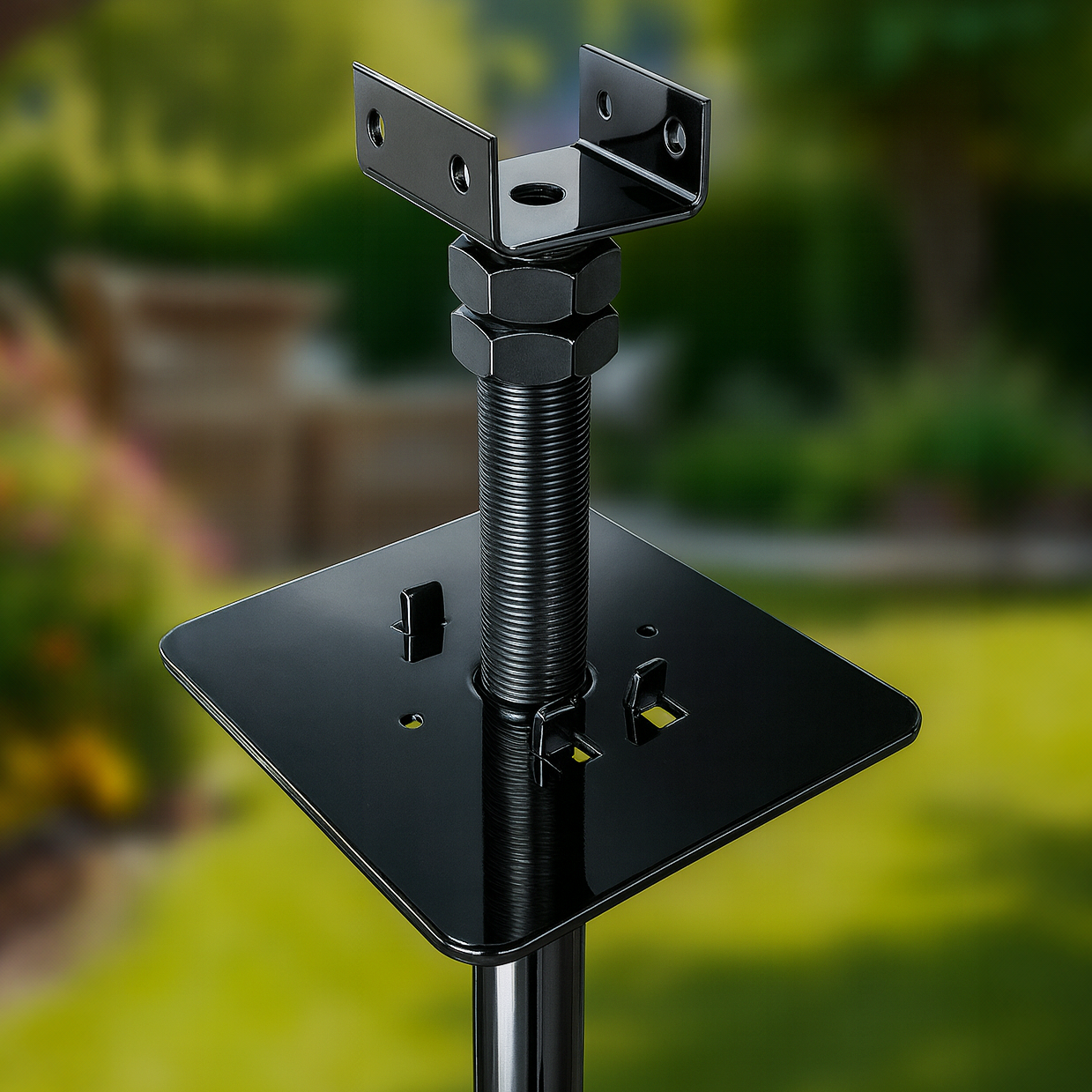
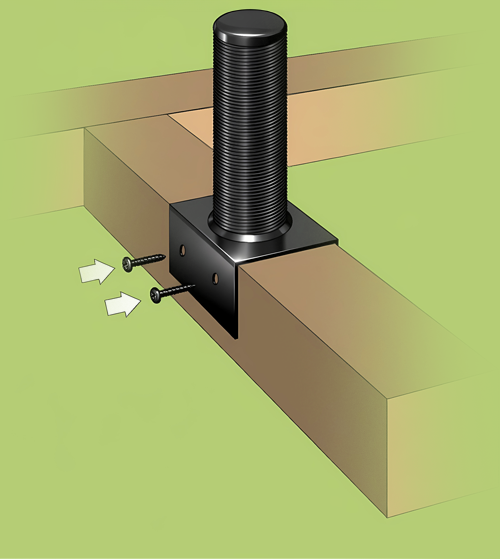
Screw the head u channel of the Swift levelling device to the frame at equal intervals. Complete this for the whole frame.
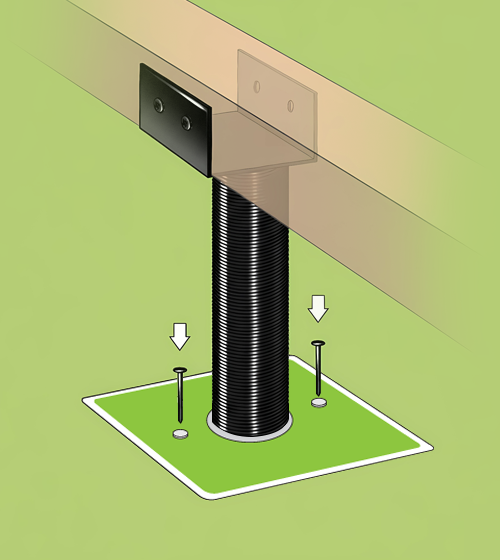
Flip the timber frame over so that the bases point to the floor. Slide the templates to the ground and pin them in position.
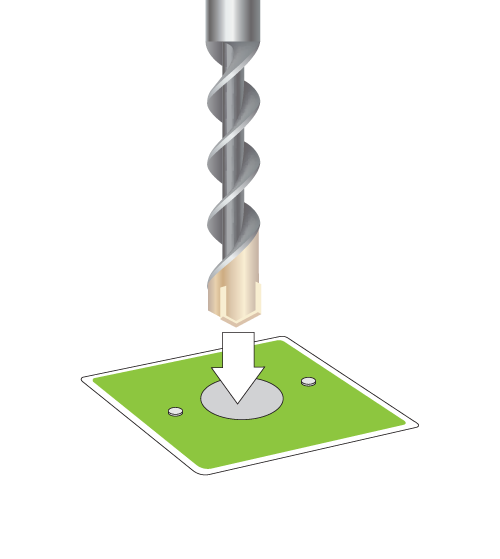
Move the frame leaving the templates in place, and drill the large centre holes in the ground.
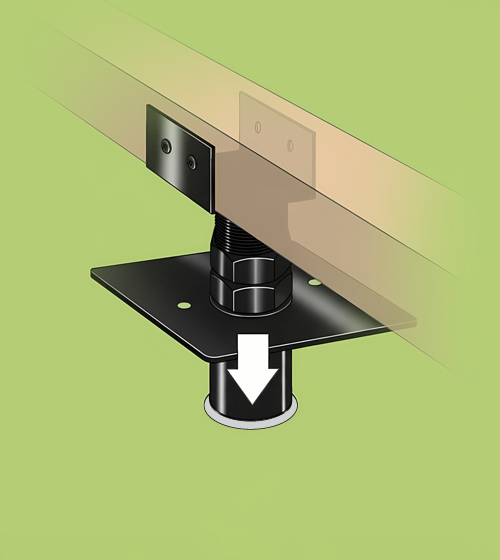
Insert the base plates into the ground. Position the heads and frame over the large centre holes and drop into place.
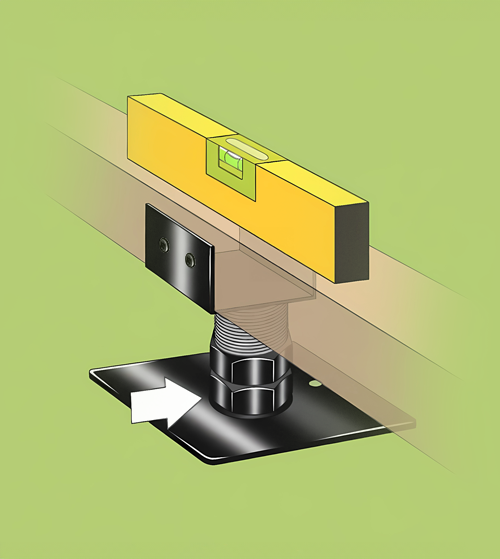
Adjust each head to the required height and tighten each nut to secure the frame. Use a spirit level to check, and adjust if necessary.
Summerhouse Bases
Creating a stable, long-lasting base for your summer house doesn’t need to involve messy concrete or heavy paving slabs. Our Summerhouse Base Kit is a smart, adjustable solution designed to support larger garden buildings with wider footprints and heavier frames. It’s ideal for wooden summer houses, garden rooms or home offices that need a level foundation across uneven or sloped ground. With weather-resistant materials and fully adjustable height control, this kit offers a cleaner, faster and more flexible alternative to traditional bases—giving you a secure structure without the disruption of digging or permanent groundwork. If you’re looking for inspiration or practical advice, there are plenty of summerhouse guides and ideas to help you plan your perfect garden retreat. Find out about our commitment to sustainability here.
Everything you need to build a strong and stable summer house base is included in one easy-to-use kit. Each pack comes with fully adjustable levellers, heavy-duty fixings and clear installation instructions to guide you through the setup with confidence. Summerhouse base kits are available in pack sizes of 4, 6, 8, 10 or 12 to suit a variety of summer house dimensions and weight requirements. For more specific setups or added support, optional accessories and custom add-ons are also available—giving you the flexibility to tailor your base to your exact garden layout. Find out about the quality of Swift Leveller products here.
Choosing the right base summerhouse base kit depends on the size, weight and intended use of your summer house. Whether you’re building a cosy garden retreat or a fully insulated home office, there’s a solution designed to suit your structure:
Use the Flexi kit for standard-sized summer houses with moderate weight and timber bases
Choose the Max kit for larger garden buildings or those with additional internal features like furniture or storage
Opt for the XL kit when installing insulated summer houses, home offices or heavier outdoor rooms that require maximum support
Always consider the number of support points needed for even weight distribution – larger builds typically benefit from 10 or 12 levellers
If in doubt, our team is happy to help you select the best kit for your specific setup and ground conditions.
Base for a Summerhouse
A stable base is the foundation of a long-lasting summer house. Without proper support, your building is at risk of sinking, warping or becoming uneven over time—especially on soft or sloped ground. A level base also plays a key role in maintaining the integrity of insulation and flooring, helping to keep your space warm, dry and secure year-round. Swift Leveller kits are engineered to deliver this kind of dependable support with ease. Made from durable, weather-resistant materials and fully adjustable to suit your ground conditions, our products offer a cleaner, faster alternative to concrete that protects your summer house from moisture, movement and long-term structural issues.
If you have any questions about our base for a summerhouse kit or need help choosing the right option for your summer house, we’re here to help. Whether it’s advice on sizing, installation or placing an order, our team is always happy to assist. Get in touch today and we’ll guide you every step of the way.
Why Summerhouses Need a Strong and Level Base
Summerhouses need a strong and level base to help support the weight of the structure properly and maintain long-term stability. Unlike smaller garden sheds, summerhouses are often built with heavier frames, larger glazed sections and stronger roof structures. Many are also used as outdoor living spaces, offices or entertaining areas, which means furniture and additional interior features can place even more pressure on the base underneath.
If the base is uneven or unsupported, the weight of the summerhouse may not be distributed correctly across the structure. Over time, certain support points can begin to sink, especially on soft ground or uneven patios. This can lead to uneven floors, movement within the frame and noticeable alignment issues. Doors may become difficult to close properly and windows can begin to sit unevenly if parts of the building shift out of level.
Damp conditions underneath the summerhouse are another common issue when the base is poorly prepared. Limited airflow below the structure can trap moisture around the floor area, which may affect the lifespan of timber components over time. A raised and properly levelled summerhouse base helps improve ventilation and drainage underneath the building while creating a more secure and balanced foundation. Adjustable support systems are particularly useful for uneven gardens because they allow the base to be levelled more accurately across difficult surfaces.
Best Ground Types
Choosing the right surface for a summerhouse base is important for stability, drainage and long-term performance. Different gardens create different installation challenges, so understanding which ground types are most suitable can help create a stronger and more reliable foundation. Concrete is often considered one of the most stable options because it provides a firm and consistent surface for supporting larger garden buildings. Paving slabs are also commonly used and can work very well when they are level and properly supported underneath.
Gravel bases are popular because they help improve drainage and reduce standing water around the structure. Decking can also support a summerhouse base if the framework underneath is strong enough to carry the weight evenly. Uneven patios and older paved areas may create unstable pressure points that affect how level the building sits over time. Sloped gardens and soft ground can also make installation more difficult because certain sections of the base may sink or shift if the weight is not distributed correctly.
Adjustable support systems help solve many of these problems by making levelling easier across uneven surfaces. They allow height adjustments to be made more accurately while helping improve airflow and drainage underneath the summerhouse. Raising the structure slightly away from the ground can also help reduce trapped moisture and create a more stable and balanced base in awkward or uneven garden spaces.
Common Problems With Summerhouse Bases
A summerhouse needs a strong and properly levelled base to help support the structure over time. Uneven ground, poor drainage and unstable support points can all affect the performance, stability and lifespan of the building.
Sinking Support Points
Soft ground and uneven weight distribution can cause sections of the base to sink over time. Adjustable supports help spread the load more evenly across the structure.
Water Pooling
Standing water underneath the summerhouse can create damp conditions and affect the floor area. Raising the structure slightly helps improve drainage and airflow.
Uneven Floors
An uneven base can lead to sloping or unstable floors inside the summerhouse. Proper levelling helps create a more balanced and comfortable space.
Misaligned Doors
If parts of the structure shift out of level, doors and windows may stop opening and closing correctly. A stable base helps keep the frame properly aligned.
Poor Airflow
Limited ventilation underneath the building can trap moisture around the floor area. Raising the summerhouse slightly improves airflow and helps reduce damp conditions.
Sloped Gardens
Installing a summerhouse on uneven or sloping ground can be difficult with traditional bases. Adjustable support systems allow more accurate levelling across awkward surfaces.
Your Questions Explained
What are the most common problems with summerhouse bases?
The most common problems with summerhouse bases include sinking support points, water pooling, uneven floors, misaligned doors, poor airflow and difficulty installing on sloped gardens.
Why do summerhouse support points sink?
Support points can sink when the ground underneath is too soft, uneven or poorly prepared. The weight of the summerhouse and anything inside it can place pressure on weak areas over time.
Can water pooling damage a summerhouse base?
Yes, water pooling underneath a summerhouse can create damp conditions around the floor area. Over time, this may affect timber components and reduce airflow beneath the structure.
Why is my summerhouse floor uneven?
An uneven summerhouse floor is often caused by a base that is not level or support points that have shifted. Levelling the base properly before installation helps create a more stable and comfortable space.
Can a poor base cause summerhouse doors to misalign?
Yes, if the base moves or sinks, the summerhouse frame can shift slightly out of alignment. This can make doors and windows harder to open and close properly.
Why does a summerhouse need airflow underneath?
Airflow underneath a summerhouse helps reduce trapped moisture around the floor. Better ventilation can lower the risk of damp conditions developing beneath the building.
Can a summerhouse base be installed on a sloped garden?
Yes, but it needs proper levelling support. Adjustable support systems can help create a level summerhouse base across sloped or uneven garden surfaces.